the bellOws

A bowl is purposed for the water it holds, the home for the life it shelters. Form gives boundary, but emptiness gives meaning. True value resides within the hollow places, the uncluttered spaces through which creation is permitted to emerge. A full vessel cannot accommodate the new. There must be an opening.

The exquisite design adorning the outer surface of a vase can be quite a spectacle to behold, yet it pales beside the mystery held within. The space surrounded by the vase is full of capacity. The structure of things—the vase, the room, even the woven fabric encircling the air of the balloon—all pledge their allegiance to the vacant space they embrace.

Lao Tzu likened the space between heaven and earth to a bellows: empty, yet inexhaustible; the more it moves, the more it brings forth, for emptiness is not deprivation. It is capacity—the condition by which the formless becomes manifest through that which has no form; where emptiness proves itself to be infinite capacity to receive, and an inexhaustible supply to give.

Centuries later, physicist David Bohm would propose something similar; reality as an undivided whole whose visible forms emerge from a deeper order. He called this the implicate order: a reality in which what appears separate at the surface remains enfolded within something more fundamental. The visible world—the explicate order—is not independent of the invisible but an unfolding from it.

The resemblance to the Tao is not equivalence, but echo.

One speaks from ancient metaphysical intuition, the other from an interpretation of quantum theory, yet both invite us to question the sovereignty of form. Perhaps the visible and invisible are indelibly integrated. Perhaps manifestation is less an act of creation from nothing than an unfolding of what is concealed.

Where Lao Tzu speaks of emptiness, Bohm speaks of enfoldment. While the propositions may differ, when viewed side by side, they inspire a common thought:

How much of what gives form to the visible world is itself invisible?

The vase offers no answer.

It simply stands before us—form surrounding emptiness, the visible embracing the unseen, its usefulness depends upon the void.

And perhaps we are not so different.

The empty spaces we seek are everywhere: between one pulse and the next, between breath and breath, between thought and action, action and response. Yet we rush to fill them—with memory, anticipation, judgment and explanation—as though an unoccupied moment were somehow incomplete.

Perhaps the opposite is true.

To inhabit a moment without immediately filling it is to become, for an instant, like the vase: bounded but open, formed but receptive, emptied yet full of possibility.

There, the finite does not disappear.

It simply makes room for the infinite.

by K. Osei

finaL dWelLing

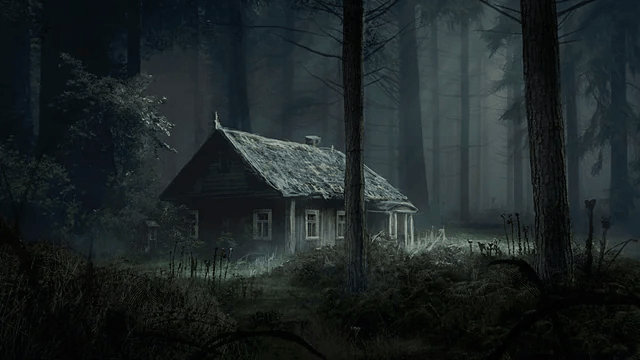
the road ends where the shadowy shanty sits alone,
amid solitude, silence and seeded fields overgrown. 

bypassed this road times before,
alluring whispers beneath implore

who lives there?

what form resides within such place
daunting darkness heavily laced

a door ajar, beckoned from afar
stoking curiosity.

primordial uneasy realm
enchanting creatures intimately found.
lodged the night watching their plight

till aurora came around.

nocturnal storm to dawning mist
evening scars turn to bliss.
balmy breeze weave through vellus hair
scent of petrichor ease despair

morning milk flowed as silk,
warm and sweet – soothing his sigh,
before flailing arms reached a cry.
swaddle removed, cradled to skin
returned two to harmony again.

early spring removed the sting
as fair trade pollinated the air

a trillion flying forms; floating things,
flooded the atmosphere without care
and fairy flies feasted plankton in the aer.

by K. Osei

acQuiescent jOy

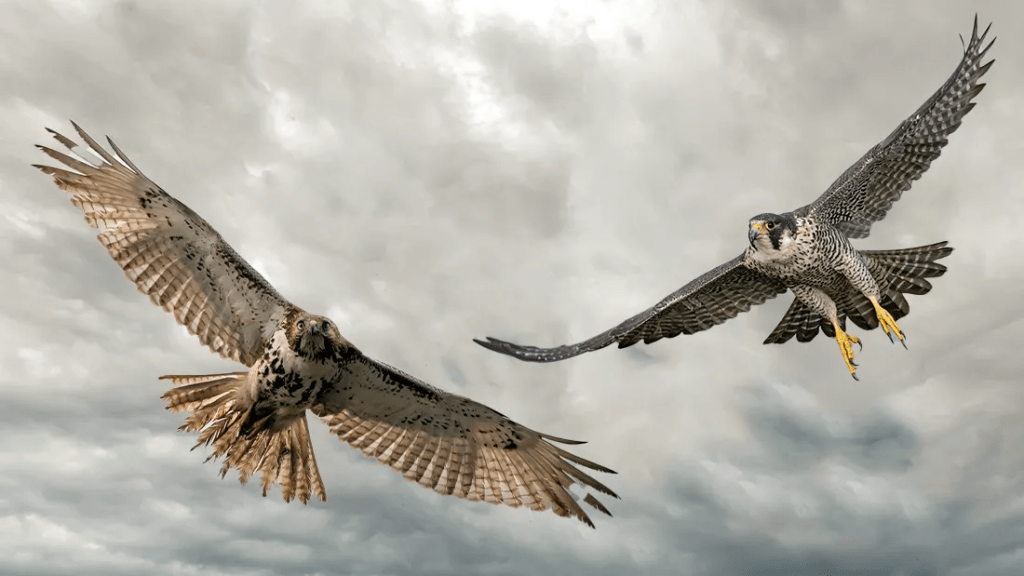
a falcon descended
in belated years
with joy and tears
a legacy extended.

the summer of Chayton arrived in spring
like Mars, an uncommon thing,
not in the conventional sense
but rather, pain and scars;

crimson-drenched. 

until dawn, fatigue we fight 
despite bruised bonds

Chayton ruled the night.

field of trees bloom crescent moon
fluttering leaves embracing noon
such ocean waves driven of wind
perfectly synchronized reflection of light
rivaled the stars that clear vernal night
affably floating in a sea of blue
pure skies above cotton fields he flew.

how indifferent and magnificent you are. 

by K. Osei